
What riders expect
- Operation with bare fingers and all glove types
- Reliable use in rain, snow, mud and more
- Easy interaction
- Consistency across every season
Gloves
One display, many glove types
Water
Part of everyday riding
Electrical noise
The invisible challenge
Display design
Thicker lenses, more layers
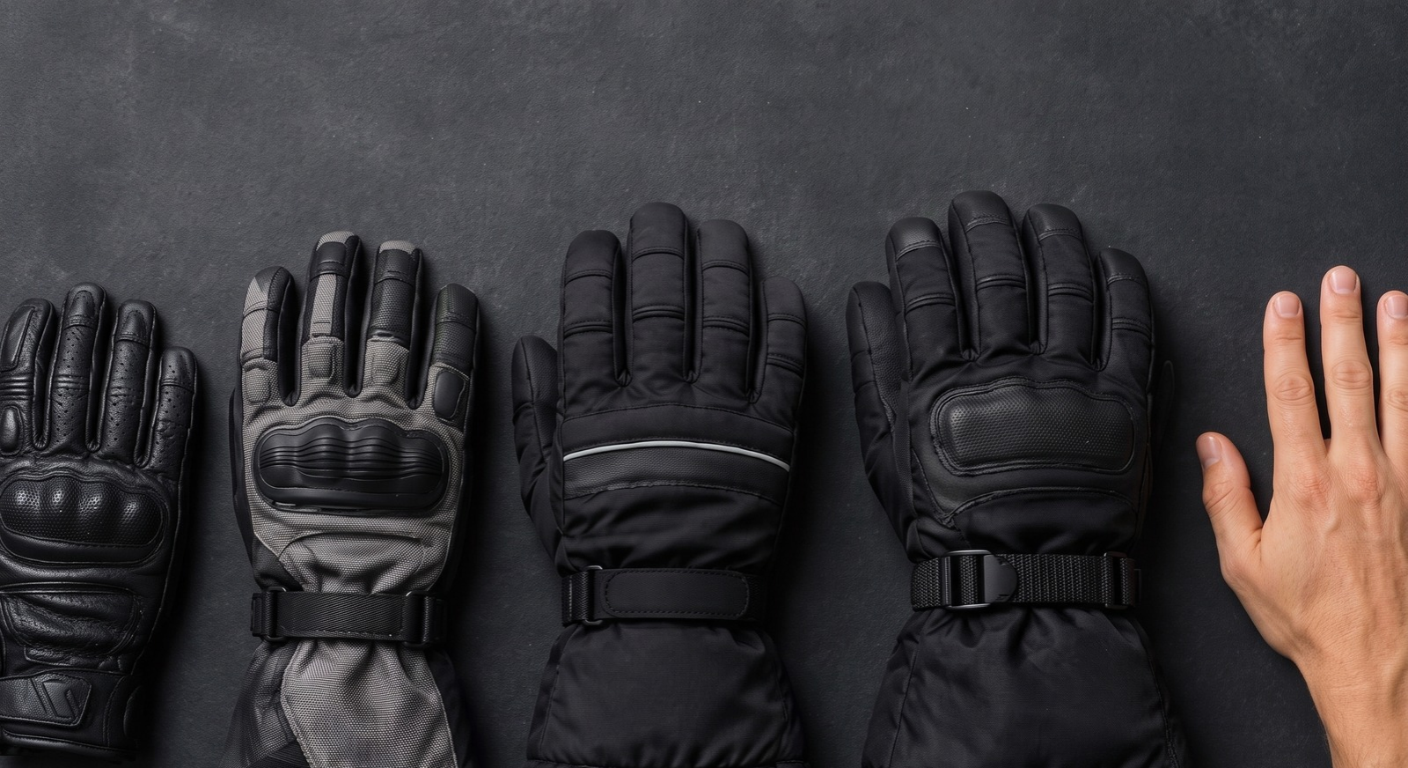
Gloves Change Everything
The same touchscreen may be used with lightweight summer gloves, waterproof touring gloves, insulated winter gloves, snowmobile gloves or bare fingers during a single journey.
Simply increasing sensitivity is not enough. A reliable system must recognise each interaction and apply the right glove or finger detection behaviour automatically.
Riders should be able to use the display naturally, without switching modes or adjusting settings.
Riders Don't Stop for Rain, and Neither Should the Screen
On a motorcycle or recreational vehicle, water exposure is part of everyday operation. The touch controller must therefore reject unwanted water interactions while continuing to recognise genuine input.
Traditional touch systems respond by reducing functionality or restricting operation entirely in wet conditions.
For riders, that compromise is rarely acceptable. Essential controls still need to work when the weather turns.

The Invisible Challenge: Electrical Noise
Mechanical Design
Touch performance is also shaped by the physical construction of the display. Manufacturers increasingly want thicker cover lenses, anti-glare coatings, anti-reflective treatments and protective layers that improve durability, visibility and perceived quality.
These features support a premium outdoor interface, but every additional layer makes accurate touch detection more demanding. Designers need a touch solution that works across different display architectures without forcing a compromise between durability, appearance and performance.

What should designers look for?
Built for the Real World: aXiom
From complex motorcycle applications and rugged outdoor displays, to demanding automotive and industrial touchscreens, aXiom delivers flawless touch and force performance across all screen sizes, aspect ratios, and custom configurations.
Glove & Finger Detection
Dedicated detection modes support all glove types and thicknesses, with seamless, natural transitions to bare fingers.
Advanced Water Tolerance
Distinguishes genuine user interaction from moisture and heavy contamination, supporting uninterrupted operation in wet conditions.
High Noise Immunity
Robust signal processing maintains accurate touch performance in electrically challenging vehicle and industrial environments.
Flexible Display Integration
From 3-inch interfaces to larger displays, with thick cover lenses, integrated NFC, and complex stack-up constructions.